
SCALING UP ON THE UNITED NATION’S DREAM OF “GLOBAL SPIRITUALITY” BY PUSHING ALL WORLD RELIGIOUS GROUPS, EXPECIALLY -GREAT COMMISSION DRIVEN GROUPS LIKE THE SOUTHERN BAPTIST INTO ONE BIG COMMUNITY DEVELOPMENT PILE, IS UNDERWAY.
SOUTHERN BAPTIST PASTOR BOB ROBERTS MULTIFAITH NEIGHBORS NETWORK/ GLOCAL NET RECEIVES ANOTHER LARGE GRANT FOR INTERFAITH DIALOG DEVELOPMENT.
By Rev Thomas Littleton
8/1/2024
“Beyond promoting mere “tolerance,” this project’s components will synergistically advance all three enabling conditions of covenantal pluralism (religious freedom, religious literacy, and pluralist virtues). By teaching and modeling engagement and catalyzing ongoing connections, this project will yield new, self-sustaining networks of creative leaders who can change the conversation about religion in challenging contexts.” ( note from TRT larger grant iniative information page.)
THE GRANT.
Grant Title
Multi-Faith Neighbors Network
Legal Organization
GlocalNet
Project Dates
Start Date: 01 May 2019
End Date: 30 April 2020
Grant Amount
$232,962
Area of Focus
“Covenantal Pluralism”
Bob Roberts, Jr., GlocalNet
“Multi-Faith Relationships Change Everything”
“What if religions built relationships through shared meals? What if religions stuck up for one another in a crisis? Pastor Bob Roberts, Jr., founder of GlocalNet and co-founder of Multi-Faith Neighbors Network (MFNN), is working with Imam Mohamed Magid and Rabbi David Saperstein to build resilient communities of mutual trust and respect among faith leaders through honest dialogue, authentic relationships, and civic engagement in an effort to build resilient cities around the world.”
STRATEGIES TOWARD MULTIFAITH COMMUNITY BUILDING
“Following the initial two-and-a-half day MFNN retreat, conversation, community building, and partnership continues in the following ways:
1. Sharing a Meal
Clerics open their homes to each other and break bread with one another. This allows a comfortable, familiar, and deeply personal space where these clerics can get to know each other.
2. Socializing as a Multi-Faith Community
Moving from engaging clerics to building bridges between faith communities is critical. Clerics involved in the program will host “mixers” at their individual places of worship for the other religious community members to attend, fostering a dialogue of multi-faith understanding and acceptance.
3. Participating in a Community Project Together
Many people talk about interfaith dialogue, but we aim to focus on multi-faith engagements. These shared experiences allow people of different faiths to work together toward a common good.
4. Standing Up for Each Other During a Crisis
MFNN is focused on creating longtime bonds that build community through religion, not in spite of it. Resilient cities are those that respect people who are different than themselves, respond to change easier, and are better prepared for unexpected events.”
THE REASON. SUPPOSEDLY
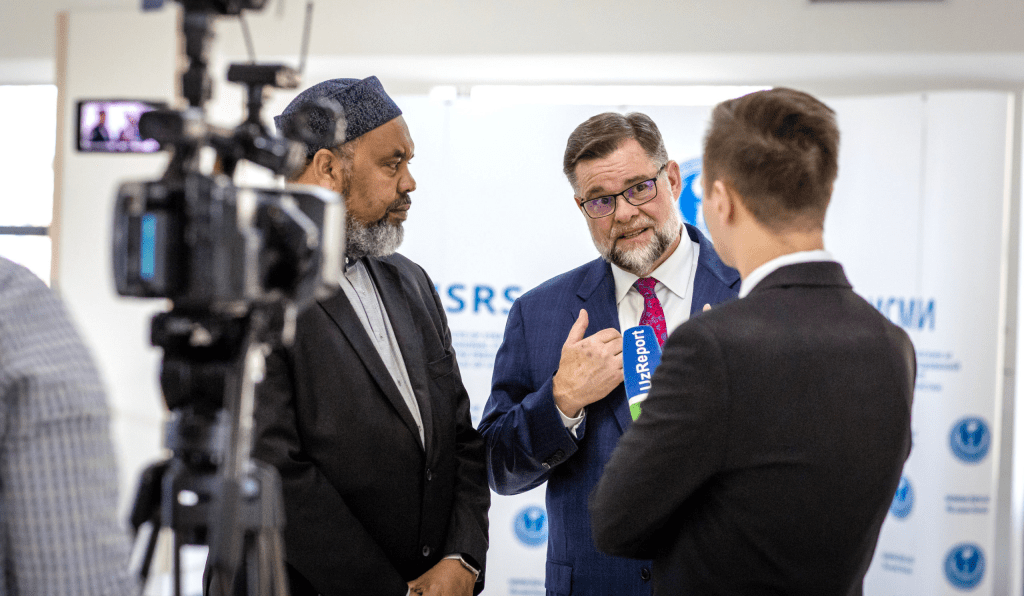
Transformation Begins with Relationships
“When pastors, say imams, rabbis, and other clerics and religious leaders come together to learn from each other, they become models for their own faith communities. By way of example, they remove fear and increase understanding within their own faith communities.”
“Multi-faith relationships allow everyone to hold onto their own beliefs while still building deep bonds with other faiths and serving their city together. Faith leaders can be a powerful, moral voice in society. Working cooperatively, they can model the very kind of society and world that all of us are trying to build – one where community, cooperation, and the common good are respected.”
REAL REASON :WHAT THE UNITED NATIONS & RIVAL RELIGIONS TO CHRISTIANITY HAVE TO GAIN BY INTERFAITH DIALOG IN AMERICA AND THE WORLD.
“ADOPTING CONSENSUS RESOLUTION, GENERAL ASSEMBLY AFFIRMS MUTUAL UNDERSTANDING, INTERRELIGIOUS DIALOGUE AS IMPORTANT DIMENSIONS OF CULTURE OF PEACE”
13 November 2008
“Lauding the right to freedom of thought, conscience and religion as integral to building tolerant societies and durable peace, the General Assembly this evening capped its two-day, high-level meeting on the Culture of Peace with the adoption of a consensus resolution reaffirming the world body’s solemn commitment to promote universal respect for all human rights and fundamental freedoms, in line with the United Nations Charter and Universal Declaration of Human Rights.”
“By its resolution on the “promotion of interreligious and intercultural dialogue, understanding and cooperation for peace”, the Assembly encouraged the promotion of dialogue among media from all cultures, and that States consider, where appropriate, initiatives that identify practical actions in all levels of society for promoting interreligious and intercultural dialogue, tolerance and understanding.”
“Further by the text, the Assembly invited the United Nations Educational, Scientific and Cultural Organization (UNESCO), in consultation with Member states, and through extrabudgetary resources, to play a lead role in preparations for the celebration of the International Year for Rapprochement of Cultures in 2010.”
UN’S GLOBAL “NEW AGE ” SPIRITUALITY ENVISIONED
“New Genesis (Shaping a Global Spirituality)”
MAKE NO MISTAKE -THE INTERFAITH EFFORTS OF THE UN ENVISION THIS GLOBAL SPIRITUALITY.
Robert Muller (11 March 1923 – 20 September 2010) was an international globalist theosophist with the United Nations. Serving with the UN for 40 years and rising to the rank of assistant secretary-general, his ideas about world government, world peace and spirituality led to the increased representation of religions in the UN, especially of the New Age movement. He was known by some as “the philosopher of the United Nations”
THE LONG HISTORY OF ROBERTS AND INTERFAITH PARTNERS LIKE DAVID PLATT.
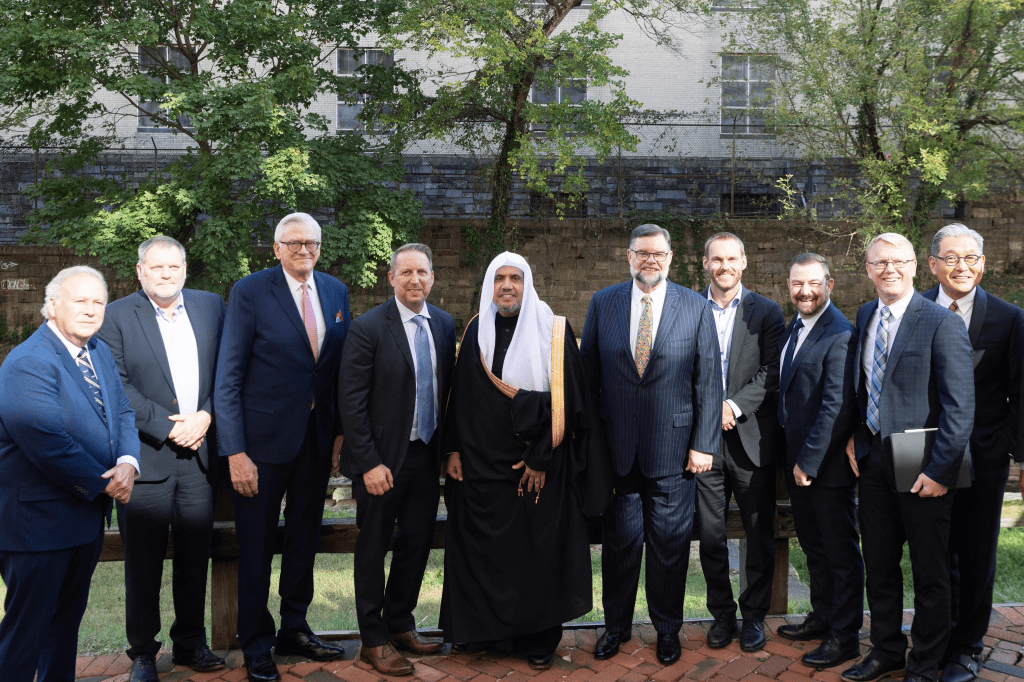
“MWL welcomed a number of American evangelical leaders in Washington, DC to review the contents of the Charter of Makkah and its purpose to establish community and global harmony.“
CHRISTIANS LEAVE THE GOSPEL AT THE DOOR.
“The Challenges of Interfaith Dialogue.”
NO GOSPEL HERE -“….The third challenge is proselytizing, or attempting to convert others. This is also antithetical to the idea of respecting each other’s differences.”
“The interfaith movement in the United States is growing. Led by organizations like the Interfaith Youth Core in Chicago, the Pluralism Project at Harvard, and the Groundswell Movement founded by Ms. Valarie Kaur (to name just a few), more and more Americans are engaging with people of different religious/spiritual identities than themselves. The mainstream media has finally started to pick up on this trend, and major news outlets like the New York Times, Washington Post, Public Broadcasting Service, and the Huffington Post frequently report on interreligious engagement.”
“…The third challenge is proselytizing, or attempting to convert others. This is also antithetical to the idea of respecting each other’s differences. It is perfectly acceptable for dialogue participants to claim that they have the absolute truth. After all, many religions make similar claims that often conflict with beliefs of other religions. However, in interfaith dialogue, participants should enter the conversation in order to learn about other religions’ beliefs, not to promote their own. Although some Muslims consider dawah (Islamic missionary work) to be an important part of their tradition, Muslims must also respect the rule in Chapter 2, Verse 256 of the Qur’an: “There is no compulsion in religion.” Thus, although there may be a time and place for proselytizing (as in other traditions like Christianity), interfaith dialogue should not be done with conversion in mind.”
“Interfaith dialogue can be an excellent way to heal divisions in society. Social science research indicates that having a positive, meaningful relationship with someone of a different background and learning about their identity correlates to viewing that person’s entire group more favorably. The same logic applies with interfaith conversations. If we as Americans pursue interfaith dialogue while attempting to address the challenges described above, we can break down stereotypes and find more areas of common ground.”
CONCLUSION
INTERFAITH DIALOG AS A MEANS TO PEACE ADN COMMON GROUND IS UNBLIBLICAL!
GALATIANS 1:8-12
Deuteronomy 12:28-32
28 Observe and obey all these words which I command you, that it may go well with you and your children after you forever, when you do what is good and right in the sight of the Lord your God.
“Beware of False Gods”
29 “When the Lord your God cuts off from before you the nations which you go to dispossess, and you displace them and dwell in their land, 30 take heed to yourself that you are not ensnared to follow them, after they are destroyed from before you, and that you do not inquire after their gods, saying, ‘How did these nations serve their gods? I also will do likewise.’ 31 You shall not worship the Lord your God in that way; for every [a]abomination to the Lord which He hates they have done to their gods; for they burn even their sons and daughters in the fire to their gods.
32 “Whatever I command you, be careful to observe it; you shall not add to it nor take away from it.
 thirtypiecesofsilverdotorg